.svg)
.gif)
December 12, 2025
Local government is approaching a breakpoint. Complaints and caseloads are rising faster than councils can process them. In housing, the Housing Ombudsman reported a 323 per cent increase in severe maladministration findings and a 40 per cent increase in maladministration overall, with the maladministration rate rising from 43 per cent to 55 per cent in a single year. Demand for formal investigations then increased by a further 60 per cent, with more than 40,000 enquiries and complaints handled in 2023 to 2024 alone.
In people services, the Local Government and Social Care Ombudsman has seen a 28 per cent increase in complaints about charging for care. Education and children’s services now make up roughly a quarter of its workload, with fault found in around four out of five detailed investigations in that domain.
The picture in SEND is similar. The total number of EHCPs created increased from 240,000 in 2015 to 517,000 in 2024 - a 115% increase! With the numbers increasing every single year since 2014, it shouldn’t be surprising that 96% of SEND tribunal hearings find in favour of parents/carers; demonstrating system failure in action.
Social care vacancy rates have only just fallen back from a peak of 10.5 per cent to 7 per cent, which still represents more than 100,000 vacant posts across England.
At the same time, the financial context is deteriorating. The Local Government Association estimates that councils in England face a funding gap of £4 billion over the two years from 2023 to 2025. The Institute for Government notes that there were more Section 114 “bankruptcy” notices in 2023 alone than in the previous thirty years before 2018 combined, and that almost one in five councils fear they may have to issue such a notice in the near term.
Digital constraints compound the problem. Civica’s 2025 Future of Local Government research shows that 57 per cent of councils cite financial restrictions as a primary barrier to digital progress, while 43 per cent face integration challenges with legacy systems.
Taken together, this is the transformation gap. A widening distance between what citizens experience and what councils intend to deliver. Between statutory obligations and the resources required to meet them. Between the complexity of real lives and the rigidity of older systems.
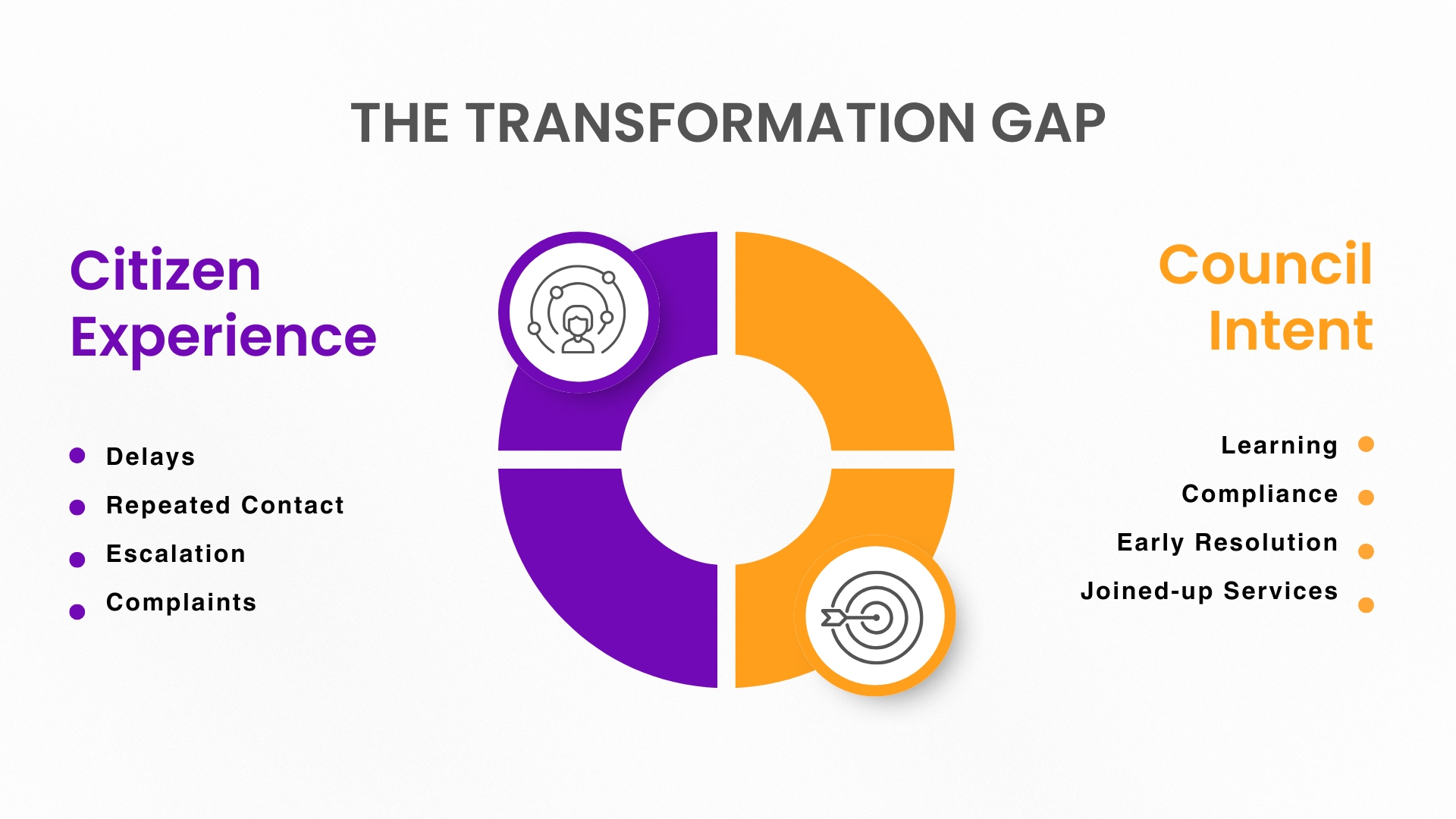
Closing this gap is not a matter of another portal or more forms. It requires a different architecture. One that can sit above legacy systems, interpret intent, orchestrate work and act on behalf of teams.
This is the shift GovMetric is building towards.
The data tells a simple story. Rising complaint volumes are not a blip. EHCP growth is not temporary. Adult social care and education are under sustained, compounding pressure. Financial risk is no longer isolated to a few outliers.
At the same time, most councils are still working inside an application landscape that was never designed for this level of demand or complexity. Core systems were built to record transactions, not to interpret language, reason across services, or evaluate their own outputs. Integration is hard, change is slow, and operational workarounds fill the gaps.
This is the environment in which GovMetric has spent years operating. It has exposed where friction lives, where failure demand originates and where staff time is silently consumed. Those lessons now shape a new approach.
A further dynamic is now accelerating change. Local government reorganisation, driven by the ongoing creation of new unitary authorities, is forcing councils to re-evaluate how services are delivered, how teams operate and how technology supports them. Reorganisation disrupts existing structures, but it also creates a rare opportunity to redesign the target operating model instead of inheriting decades of accumulated complexity.
During reorganisation, councils are already reconsidering service boundaries, governance, staffing and budgets. This makes it the ideal moment to adopt an operating model shaped for an agentic AI world. Instead of migrating legacy systems as they are, councils can introduce an intelligence layer that interprets intent, orchestrates workflows and carries out actions across departments. AI becomes part of the foundational architecture, not an add-on applied after the fact.
This shift aligns directly with the direction of travel emerging in central government. Through GDS ‘Local’, the Government Digital Service has begun to define a shared technology stack for local authorities. Phil Rumens, a leading voice in this work, has outlined a modular, composable architecture that emphasises interoperability, common data standards and reusable digital capabilities. The intent is clear. Councils should not build bespoke systems for every service. They should adopt a consistent operating stack that can evolve, integrate and be automated.
Reorganisation, combined with the guidance from GDS Local, gives councils a strategic window. They can leapfrog legacy constraints, align with a national architectural standard and embed agentic capability at the core of service delivery. Instead of replicating the past, they can define how future councils operate.
Across GovMetric’s products a common pattern is emerging. It looks less like a set of applications and more like an operating fabric.
• Understanding layer that reads text, speech and documents from citizens and staff.
• Decision layer that classifies, routes, prioritises and recommends actions.
• Generation layer that drafts responses, letters and statutory documents.
• Governance layer that checks accuracy, policy alignment and auditability.
• Action layer that completes tasks in core systems and triggers workflows.
• Insight layer that surfaces trends, failure demand and emerging risks.
This is the architecture that allows councils to move from manual, fragmented workflows to coordinated, intelligent operations without needing to rip out the systems they already rely on.
GovMetric’s products each occupy distinct parts of this architecture.
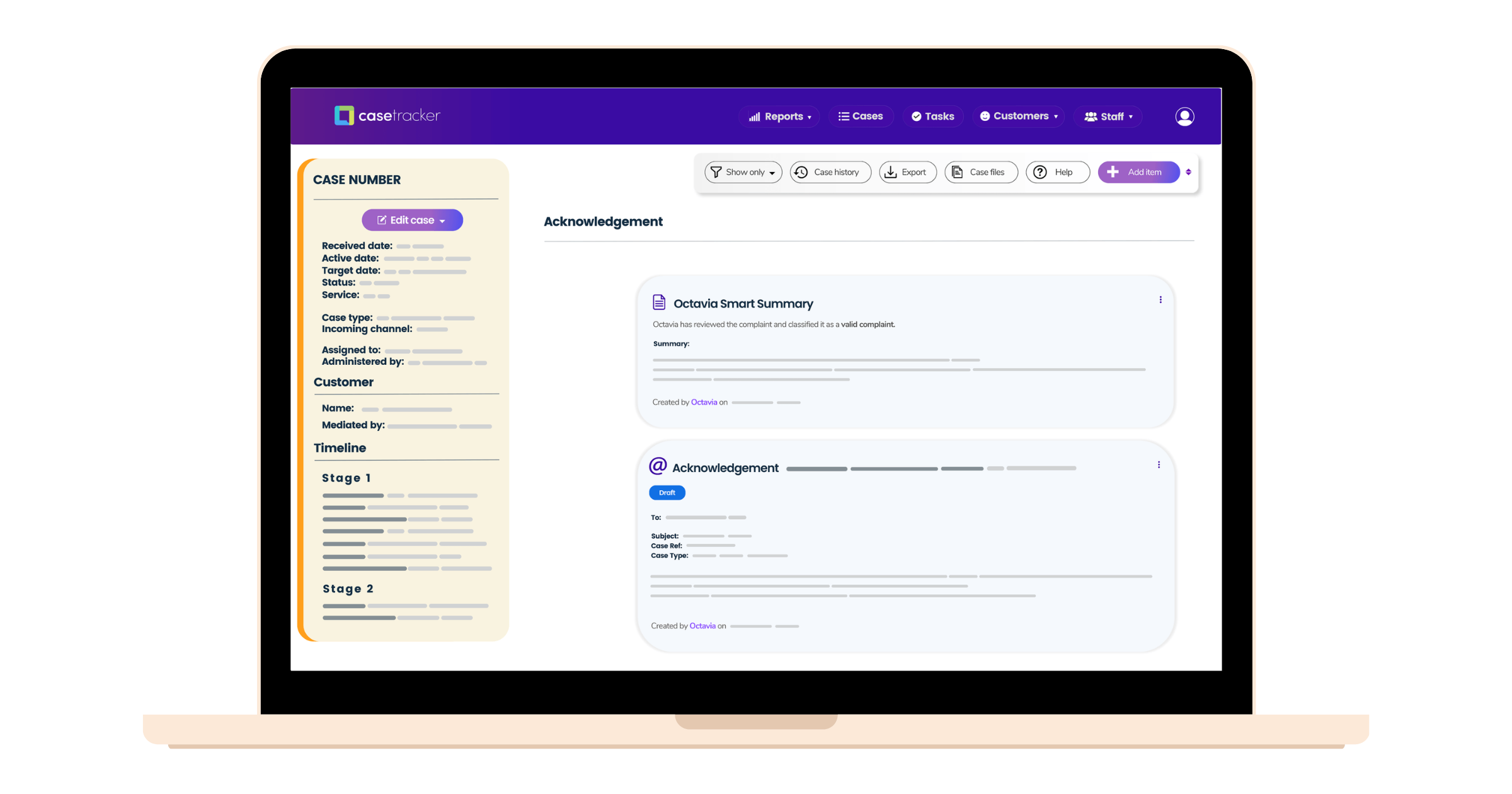
CaseTracker brings every type of contact into a single, intelligent workflow. Whether the interaction begins through Octavia, online forms, emails or API integrations, the system applies the same AI-driven interpretation. It reads the request, understands intent, extracts key details and applies local policy rules to create the correct case automatically.
This is especially powerful for elected members and MPs who continue to rely on email as their primary channel. Without forcing them to change behaviour, CaseTracker provides a frictionless and innovative experience that transforms their messages into structured cases instantly.
Council staff then see all activity in one place, creating a single, consistent view of every enquiry, complaint or service request, regardless of how it entered the organisation.
By unifying channels and eliminating manual triage, CaseTracker reduces friction for residents, councillors and officers alike. It replaces scattered inboxes with a coordinated, actionable workflow and turns every channel into a first-class entry point for high-quality service delivery.
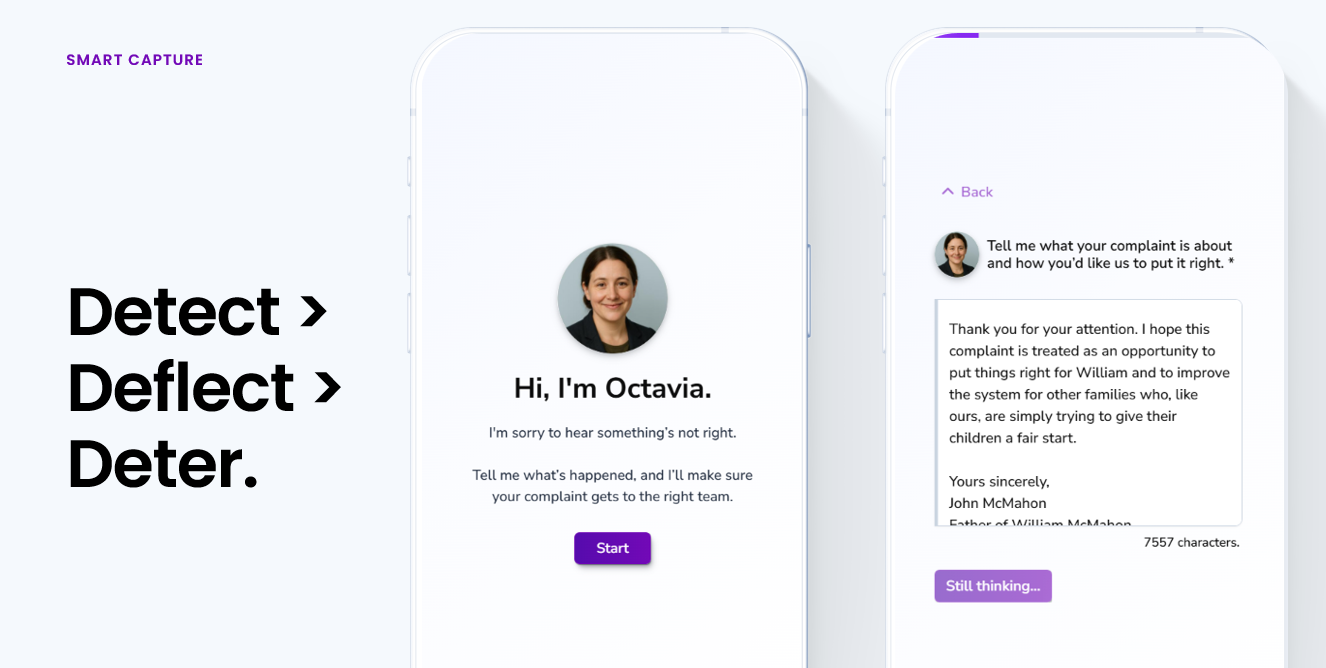
GovMetric Octavia is the orchestration layer that enables multiple intelligent behaviours to operate in harmony. It inhales unstructured communication, generates structured actions, updates systems and maintains compliance.
It is not a chatbot. It was the first step toward the creation of a coordinated digital team.
.png)
GovMetric Nexa supports a domain under extraordinary strain. It produces accurate EHCPs, Annual Reviews and PFA Plans through a multi-stage evaluation loop that checks its work against policy, evidence and local guidance.
It delivers accuracy at scale, which is essential when demand rises and staffing does not.
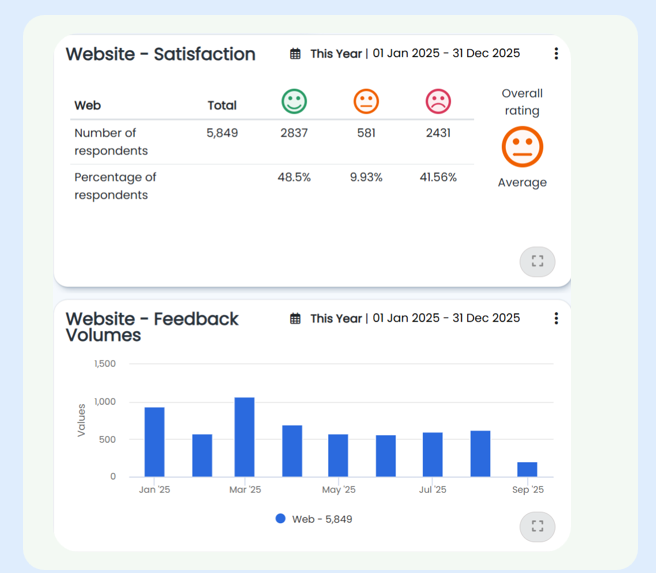
GovMetric CX is the system that reveals what citizens are really experiencing. It turns unstructured feedback into clear themes that leaders can act on. It highlights the drivers of dissatisfaction, the patterns behind failure demand and the early signs of service pressure before they become visible in case volumes.
CX is the strategic signal layer that helps executives understand where the organisation is succeeding and where it is drifting off course. It feeds the intelligence needed for better decisions and sharper prioritisation.
Once an organisation can interpret intent at scale, route work precisely, generate high quality outputs and complete downstream actions consistently, something important changes. The technology stops behaving like a set of tools and starts to resemble an operational team.
At that point, the natural question is not “what feature comes next” but “what kind of workforce can this support.
This is where GovMetric’s trajectory is heading.
We are learning, evolving and building at an increasingly exponential rate. Years of experience in complaints, feedback and EHCP drafting have shown us where the friction is and where the cost sits. We are now ready to apply that learning to a larger ambition.
Project Tectonic is a multi agent digital team for the public sector. A coordinated group of specialised agents that field calls, service requests, complaints and general interactions, then resolve them with intelligence, transparency and reliability. Each agent has a defined role. Each shares context. Each improves over time.
Instead of isolated automations, councils gain a cohesive digital workforce that complements their human teams. Caseworkers, complaints officers and SEND leads focus on the judgement calls that only they can make, while the digital team handles the heavy, repeatable work around them.
Project Tectonic is not about AI for its own sake. It is about better outcomes at lower cost. It is about building the operating system that public services have needed for years but lacked the technology to implement.
The architecture is in place. The pressures are undeniable. The next step is to assemble the digital team that can work inside that architecture every day.
GovMetric intends to build it.
Ps.: Our CTO Lewis Harper is just wrapping up a wonderful blog on use of AI in the public sector and software development. For those wondering how to ensure you build compliant, explainable, auditable, and efficiency driving software with AI look out for that.
References:
UK Authority. “GDS to assess local government technology stack.”
https://www.ukauthority.com/articles/gds-to-assess-local-government-technology-stack
GOV.UK Technology in Government Blog. “Sourcing the stack for local government technology” (2025).
https://technology.blog.gov.uk/2025/11/07/sourcing-the-stack-for-local-government-technology/
Housing Ombudsman. Annual Report 2023–24.
• Severe maladministration findings increased 323 percent; maladministration rose from 43 percent to 55 percent.
• Enquiries and complaints exceeded 40,000 in 2023–24.
https://www.housing-ombudsman.org.uk/about-us/corporate-information/annual-reports
Local Government and Social Care Ombudsman. Annual Review 2023.
• Adult care complaints increased 8 percent; complaints about charging for care increased 28 percent.
https://www.lgo.org.uk/information-centre/news/2023/jul/ombudsman-sees-upheld-complaints-rise
Local Government and Social Care Ombudsman. Annual Review of Education & Children’s Services (2023).
• Education and children’s services represent ~25 percent of workload; ~80 percent fault rate in detailed investigations.
https://www.lgo.org.uk/information-centre/news/2023/sep/education-complaints-annual-review
Skills for Care. Adult Social Care Workforce Data 2024.
• Vacancy rates fell from 10.5 percent to 7 percent; still over 100,000 vacancies.https://www.skillsforcare.org.uk/adult-social-care-workforce-data/Workforce-intelligence/publications/national-workforce-data.aspx
Local Government Association. Financial Analysis 2023.
• Councils face a £4 billion funding gap between 2023 and 2025.
https://www.local.gov.uk/about/news/cost-pressures-leave-councils-facing-fresh-ps4bn-funding-gap
Institute for Government. “Section 114 Explainer.”
• More Section 114 notices were issued in 2023 than in the previous 30 years before 2018; almost 1 in 5 councils fear issuing one.
https://www.instituteforgovernment.org.uk/explainer/section-114
Civica. Future of Local Government 2025 Report.
• 57 percent of councils cite financial restrictions as a barrier to digital transformation; 43 percent cite legacy integration challenges.
https://www.civica.com/en-gb/insights/local-government-2025-the-future-is-here/
Department for Education. Special Educational Needs: An Analysis 2015–2024.
• Total EHCPs increased from 240,000 in 2015 to 517,000 in 2024 (arise of more than 115 percent).
https://explore-education-statistics.service.gov.uk/find-statistics/special-educational-needs-in-england/2024-25
Department for Education. Education, Health and Care Plans: England 2024.
• New EHCP requests reached 84,428 in 2023–24, the highest since the 2014 reforms.
• EHCPs have increased every year since their introduction in 2014.
https://explore-education-statistics.service.gov.uk/find-statistics/education-health-and-care-plans
Judiciary UK. SEND: Improving Local Authority Decision-Making (2024).
• 96 percent of SEND tribunal hearings find in favour of parents/carers, demonstrating systemic pressure.
https://www.judiciary.uk/wp-content/uploads/2024/08/SEND-Improving-Local-Authority-Decision-Making.pdf
January 20, 2026
.jpg)
December 17, 2025



.svg)
Insights + AI = ROI