.svg)
April 28, 2026
For years, decision quality in SEND has been treated primarily as a practice issue. Important, yes, but rarely the main conversation when finance teams and chief executives sat down to discuss the high needs budget.
That has changed.
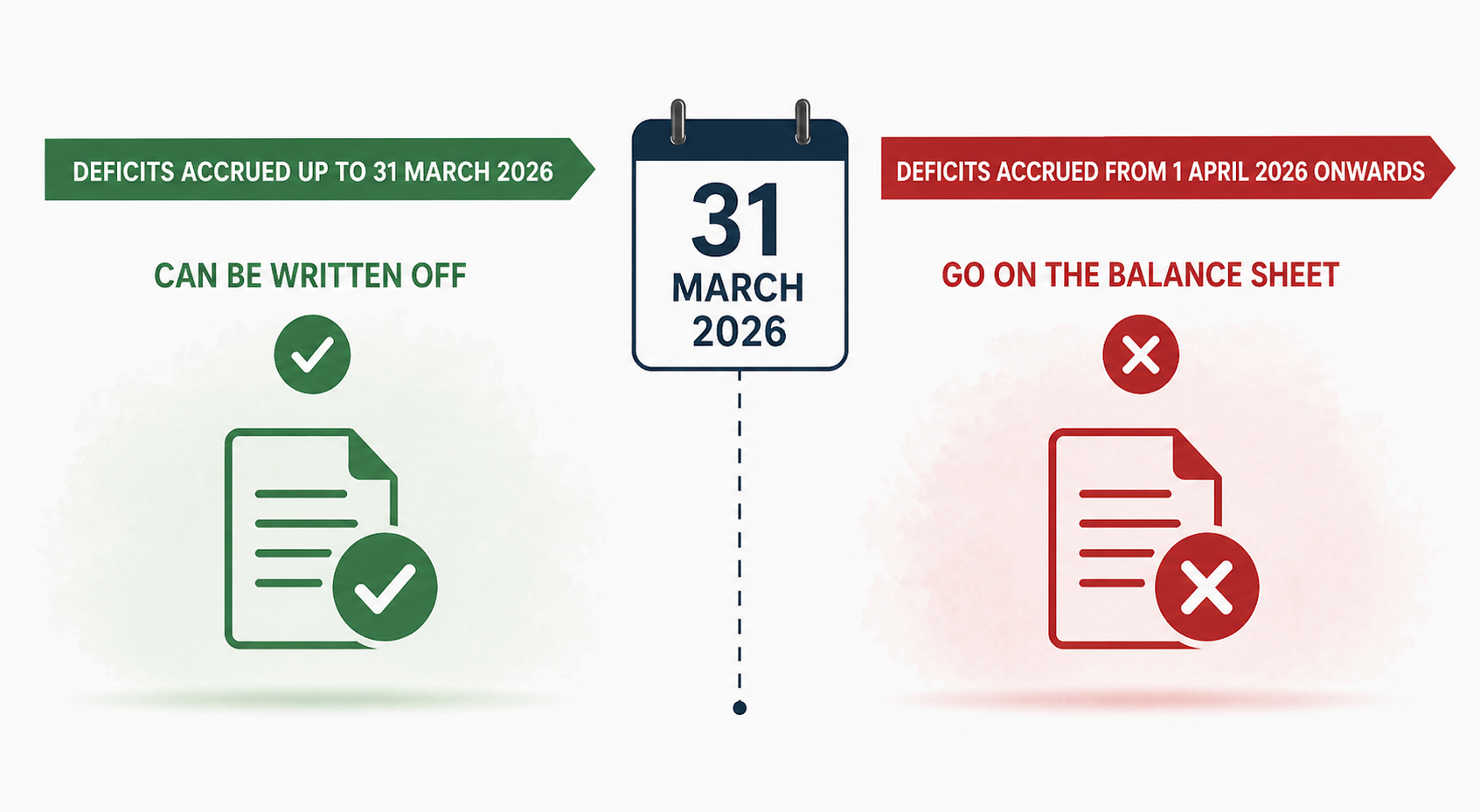
The statutory override on Dedicated Schools Grant deficits has ended. The new High Needs Stability Grant will write off 90% of historic deficits – but only for councils whose SEND reform plan is approved by the Department for Education, and only for deficits accrued up to 31 March 2026. Everything from now on sits directly on the balance sheet.
GET YOUR PRE-FILLED SEND REFORM PLAN TEMPLATE
Every weak decision at the front end of the EHCP process now carries a financial consequence that a Director of Children's Services, a Section 151 Officer and a Chief Executive need to understand together.
⚈ Councils spent an estimated £153 million defending SEND tribunal appeals in 2023/24, up from £99 million the year before.
⚈ In 2024/25, 25,000 appeals were registered – an 18% rise, and the ninth consecutive annual increase.
⚈ 99% of decided appeals go in favour of the appellant.
⚈ The nationwide high needs deficit is projected to reach £8.2 billion by 2026/27.
This is the question we hear most when decision quality comes up in finance conversations. Not exactly – and the conditions attached to the write-off are the reason this matters more now, not less.
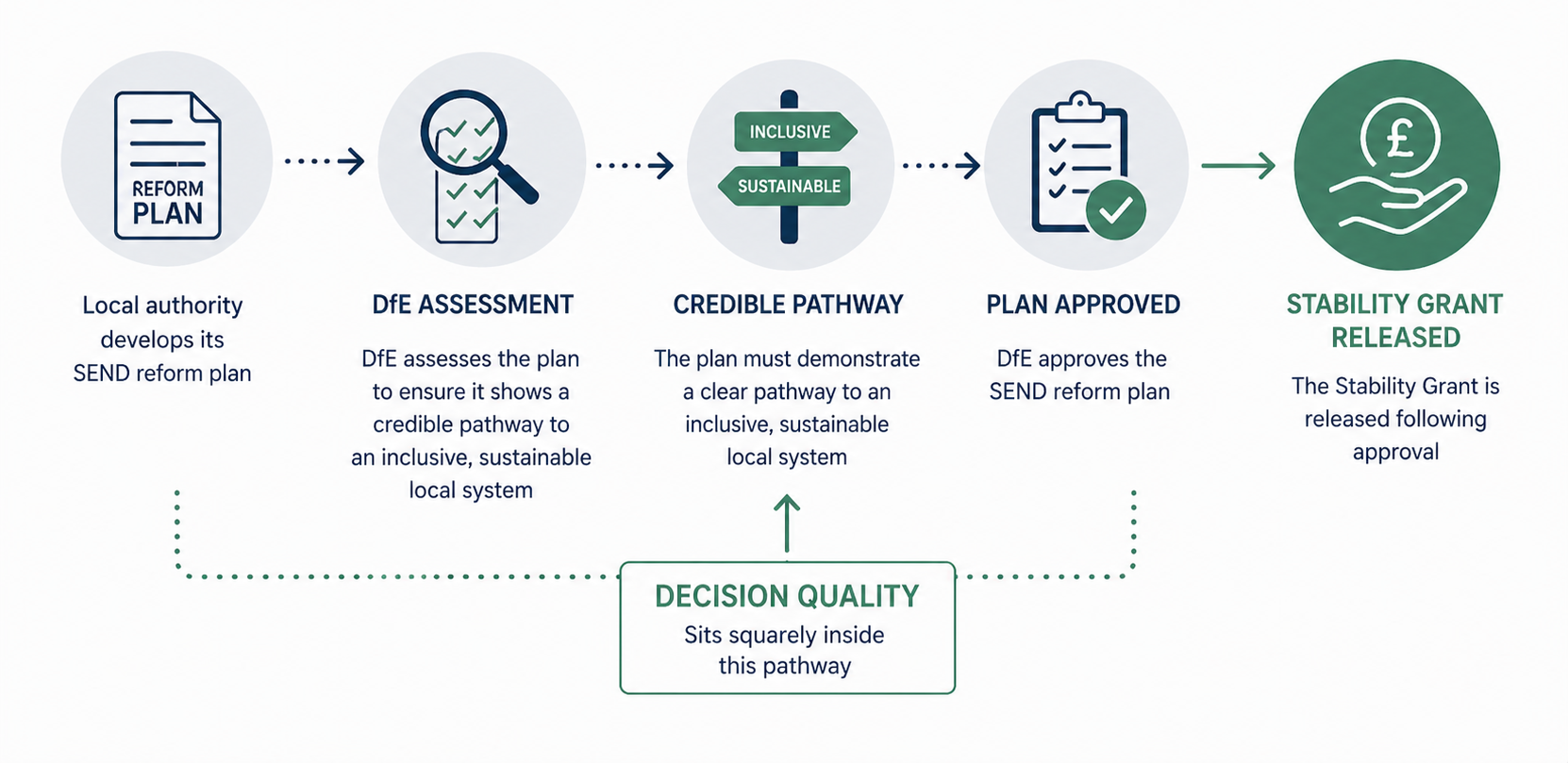
It is conditional, not automatic. The Stability Grant is only released when a local authority's SEND reform plan has been approved by DfE. The plan has to show a credible pathway to an inclusive, sustainable local system. Decision quality sits squarely inside that pathway.
GET YOUR PRE-FILLED SEND REFORM PLAN TEMPLATE
It is a line in the sand, not an ongoing subsidy. The grant covers deficit up to 31 March 2026. Anything added after that date goes straight onto the balance sheet. Councils that keep generating deficit at the same rate will be back in the same place within two or three years, with no override to soften the landing.
A £9 billion intervention invites scrutiny. When central government writes off a deficit of this scale, it does not walk away afterwards. Expect a closer look at statutory decision-making, not a lighter one.
The write-off is real, and it matters. But it is not a reason to relax about how decisions are being made. It is a reason to look harder.
The leverage sits at the front end of the EHCP process – the moments when a request for assessment is considered, evidence is weighed, a plan is drafted and provision is specified. Get those moments right and the downstream costs reduce: tribunal defence, remade plans, contested placements, time lost to disputes. Get them wrong and those costs compound.
Better decision quality doesn't mean faster decisions or a higher threshold for assessment. It means consistency across caseworkers and panels, defensibility against the statutory framework, clarity in how provision is specified, and traceability from evidence through to rationale. These are the characteristics that determine whether a plan holds at tribunal – and whether a family feels they have been listened to along the way.
EHCP+ is our AI enabled improvement model for statutory SEND decision-making. It combines a defined specification, a generative AI component built by our technology partner, a service wrapper and a structured implementation approach.
The AI doesn't make the decision on plans. It supports the caseworker to draw evidence together consistently, structure plans against a clear specification, surface gaps in rationale before a decision is finalised, and produce plans that are easier to quality assure and easier to defend.
The improvement is in the practice, not the technology. In the authorities we've worked with, it shows up in decision consistency, reduced rework, the time caseworkers get back with children and families, and the defensibility of the plans themselves.
SEND finances are in a difficult place, and no single intervention fixes that. But decision quality belongs in the reform plan conversation now, in a way it hasn't before. Every well-made decision at the front end reduces pressure further down the line – on tribunal budgets, on placement costs, on family relationships, and on the staff carrying the caseload.
The financial case and the practice case have arrived at the same conclusion. That's a useful place to start from.
GET YOUR PRE-FILLED SEND REFORM PLAN TEMPLATE
January 20, 2026
.jpg)
December 17, 2025




.svg)
Insights + AI = ROI